
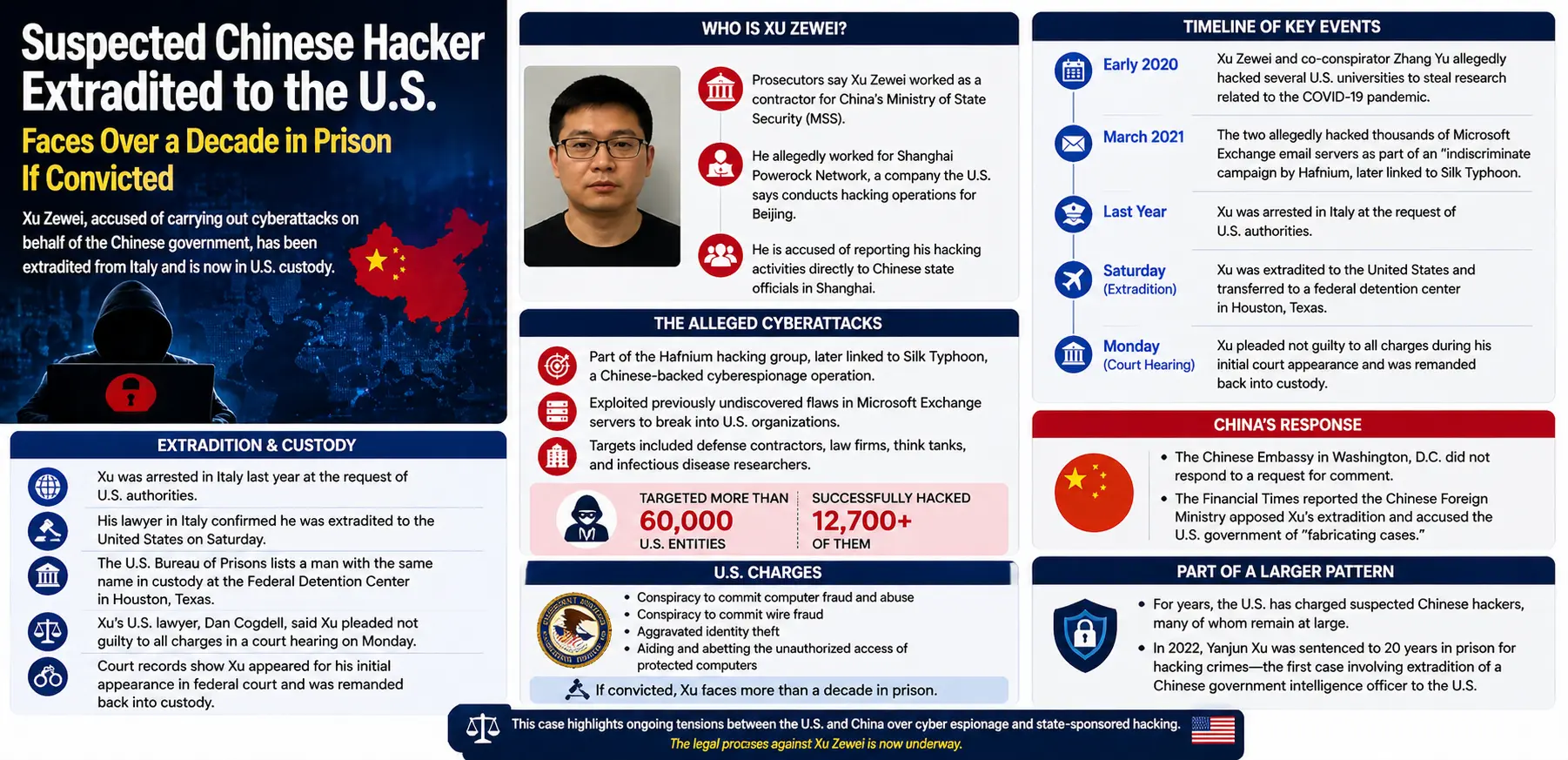
A man accused of carrying out cyberattacks on behalf of the Chinese government has been extradited to the United States, where he could face more than a decade in prison if convicted.
For more articles
आरोप: Cyberattacks Linked to State Security
U.S. prosecutors allege that Xu Zewei worked as a contractor for China’s Ministry of State Security. He is accused of participating in cyber operations targeting U.S. institutions, including universities researching COVID-19 in early 2020.
Massive Microsoft Exchange Hack
Xu and an alleged accomplice, Zhang Yu, are also linked to a large-scale 2021 hacking campaign exploiting vulnerabilities in Microsoft Exchange servers. The attacks were attributed to groups known as Hafnium and later Silk Typhoon.
Hacker who allegedly carried out cyberattacks for China is extradited to US
Widespread Impact Across the U.S.
According to prosecutors, the حملة targeted more than 60,000 entities across the United States, including defense contractors, law firms, think tanks, and research institutions. Over 12,700 organizations were reportedly compromised.
Arrest and Extradition from Italy
Xu was arrested in Italy last year at the request of U.S. authorities. He has now been extradited and is being held at a federal detention center in Houston, Texas.
Court Appearance and Plea
During his initial court appearance, Xu pleaded not guilty to all charges. He has been remanded into custody as legal proceedings continue.
Alleged Links to Chinese Entities
Prosecutors claim Xu worked for Shanghai Powerock Network, a company accused of conducting hacking operations for the Chinese government, with activities reportedly coordinated with state officials.
Diplomatic Tensions
China has opposed the extradition, with its Foreign Ministry accusing the U.S. of fabricating charges. The Chinese Embassy in Washington has not issued an official response.
Broader Pattern of Cybercrime Cases
The case follows a series of U.S. actions against suspected Chinese hackers. In 2022, another आरोपी, Yanjun Xu, was sentenced to 20 years in prison after being extradited, marking a significant precedent.
