
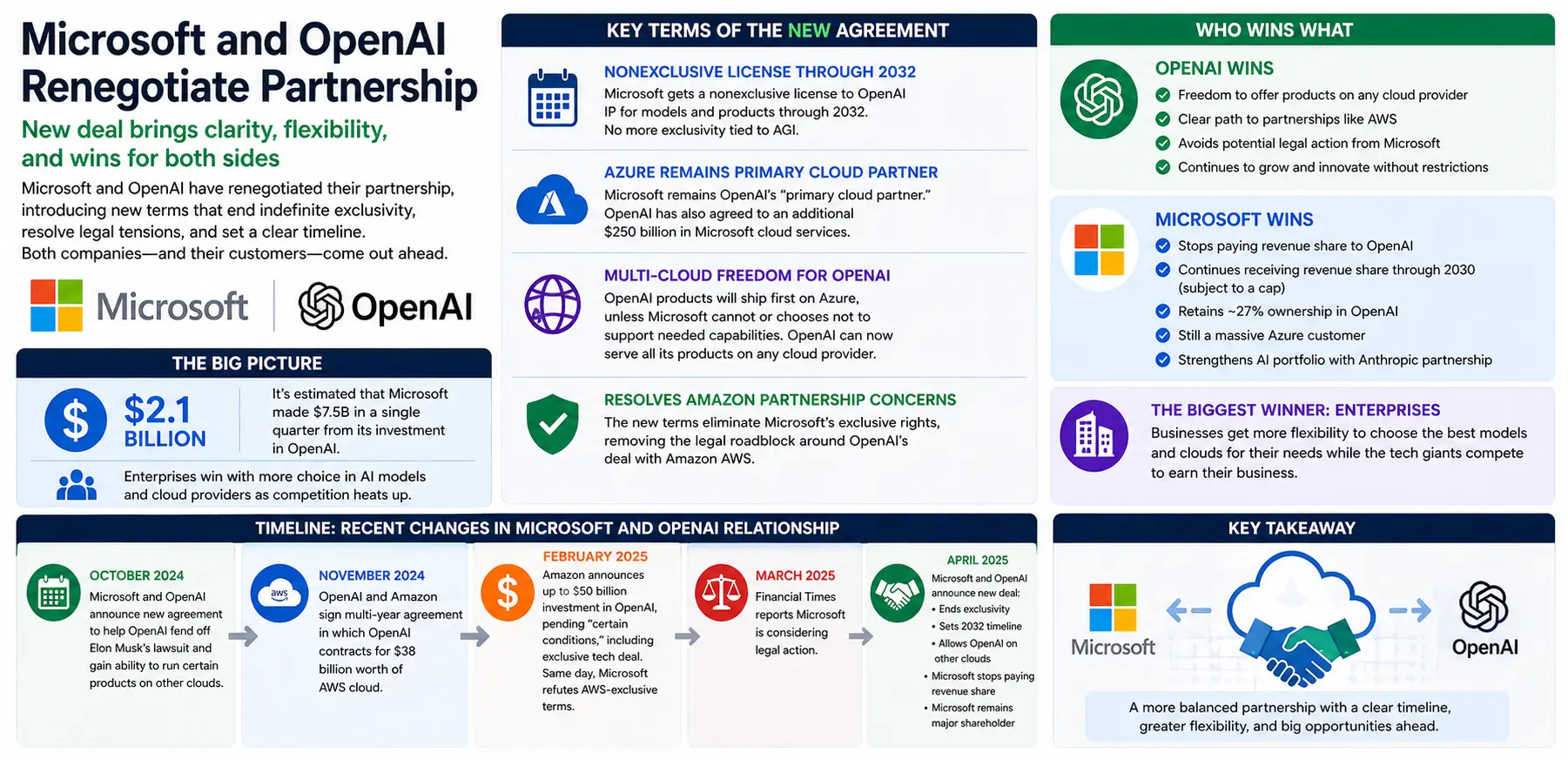
Microsoft and OpenAI have revised their long-standing agreement, introducing new terms that reshape their collaboration. While some view it as a win for OpenAI, the updated deal ultimately benefits both companies.
For more articles
End of Exclusivity, Clear Timeline Introduced
The biggest shift is the move away from indefinite exclusivity tied to achieving AGI. Microsoft now holds a nonexclusive license to OpenAI’s models and products through 2032, giving the partnership a defined timeframe.
Azure Remains the Primary Cloud Partner
Despite reduced exclusivity, Microsoft Azure will continue as OpenAI’s primary cloud provider. OpenAI has also committed to significant Azure spending, including a previously announced $250 billion cloud deal, reinforcing Microsoft’s role.
OpenAI Gains Multi-Cloud Freedom
A key change allows OpenAI to offer its products across multiple cloud providers. While new products may still launch on Azure first, OpenAI is no longer restricted from distributing them on platforms like AWS.
Resolving Tensions with Amazon Deal
This update addresses conflicts created by OpenAI’s agreement with Amazon, which included plans to develop AI agent technology and offer tools like “Frontier” on AWS. Previously, Microsoft’s exclusive rights could have blocked or complicated that arrangement.
Avoiding Legal Conflict
The earlier agreement risked triggering legal disputes, as Microsoft had signaled it might enforce exclusivity terms. The revised deal removes that friction and clears the path for OpenAI’s partnerships beyond Azure.
Microsoft Secures Financial Benefits
Microsoft gains important concessions. It will no longer pay revenue share to OpenAI, while OpenAI will continue sharing revenue with Microsoft through 2030, subject to a cap. Given past earnings, this could still translate into billions for Microsoft.
Continued Stake in OpenAI’s Growth
Microsoft remains a major investor, holding about 27% of OpenAI’s for-profit entity. This ensures it benefits financially from OpenAI’s expansion—even when services run on competing clouds.
Trade-Off: Less Cloud Exclusivity
The downside for Microsoft is reduced exclusivity in cloud services, potentially limiting additional Azure revenue. However, Microsoft is also strengthening ties with OpenAI competitor Anthropic, balancing its AI strategy.
Enterprises Gain More Flexibility
The biggest beneficiaries may be enterprise customers, who now have greater choice in selecting AI models and cloud providers as competition between major tech players intensifies.
Timeline of Key Events
- October: Microsoft and OpenAI adjust terms to allow some flexibility amid legal pressures.
- November: OpenAI signs a major multi-year cloud deal with AWS.
- February: Amazon announces up to $50 billion investment in OpenAI, sparking conflict with Microsoft.
- March: Reports emerge that Microsoft considered legal action.
- April: New agreement finalized, ending exclusivity and enabling multi-cloud distribution.
