
AI meeting tools are moving past simple transcription and summaries. Companies now aim to become full productivity platforms where users can gather data from multiple sources, search across it, and make business decisions in one place.
For more articles
Otter Embraces Enterprise Search with MCP
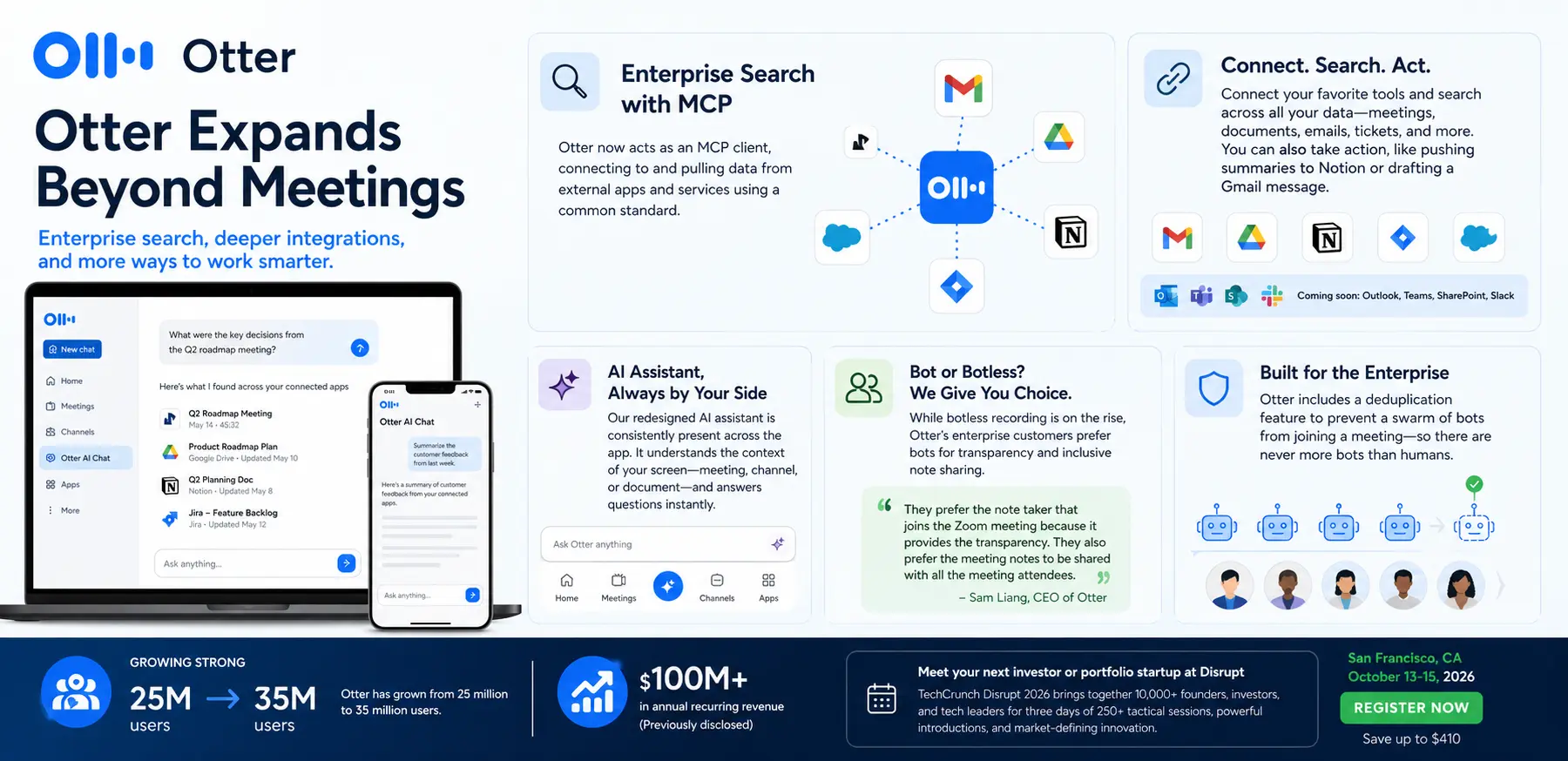
Otter is taking a major step by adopting Model Context Protocol (MCP), allowing it to connect with external apps through a standardized system. This shift positions Otter as more than a note-taking tool—it becomes a centralized workspace for enterprise data.
Integrations Across Popular Work Tools
With this update, users can link accounts like Gmail, Google Drive, Notion, Jira, and Salesforce. Soon, integrations will expand to Microsoft Outlook, Teams, SharePoint, and Slack. This allows users to search across all connected platforms, send summaries to Notion, or even draft emails directly within Otter.
Always-On AI Assistant
Otter has redesigned its AI assistant to stay accessible throughout the interface. It understands the context of what the user is viewing—whether it’s a meeting or a channel—and provides relevant answers instantly.
Bot vs. Botless Meeting Recording
The industry is split between bot-based and botless meeting recording. While some tools are adopting system-audio recording without bots, Otter continues to support bot-based note-taking. According to CEO Sam Liang, enterprise users prefer bots for transparency and easy sharing of notes with all participants.
Preventing Bot Overload
To address concerns about too many bots joining calls, Otter has introduced a deduplication feature. This ensures meetings don’t get overcrowded with multiple note-taking bots.
Growth and Market Position
Otter continues to grow steadily, expanding from 25 million to 35 million users. While updated revenue figures were not disclosed, the company previously reported $100 million in annual recurring revenue, signaling strong market demand.
