
Introduction
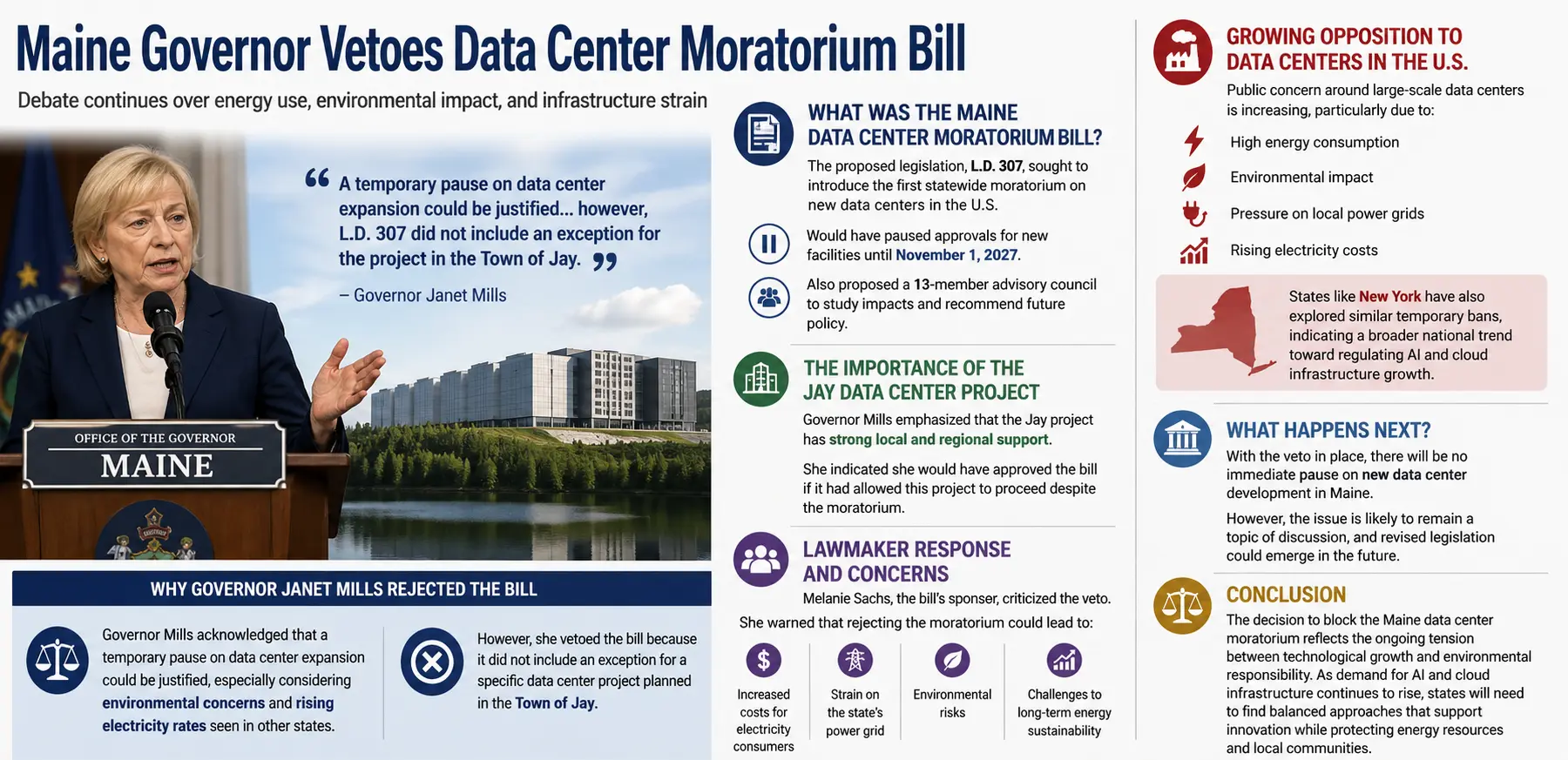
The expansion of data centers across the United States has sparked growing debate over energy use, environmental impact, and infrastructure strain. In a recent development, Maine Governor Janet Mills has vetoed a bill that aimed to temporarily stop new data center projects in the state.
For more articles
What Was the Maine Data Center Moratorium Bill?
The proposed legislation, L.D. 307, sought to introduce the first statewide moratorium on new data centers in the U.S. If passed, it would have paused approvals for new facilities until November 1, 2027.
The bill also included a provision to establish a 13-member advisory council responsible for studying the impact of data centers and providing recommendations for future development policies.
Growing Opposition to Data Centers in the U.S.
Public concern around large-scale data centers is increasing, particularly due to:
- High energy consumption
- Environmental impact
- Pressure on local power grids
- Rising electricity costs
States like New York have also explored similar temporary bans, indicating a broader national trend toward regulating AI and cloud infrastructure growth.
Why Governor Janet Mills Rejected the Bill
In her official statement, Governor Mills acknowledged that a temporary pause on data center expansion could be justified, especially considering environmental concerns and rising electricity rates seen in other states.
However, she vetoed the bill because it did not include an exception for a specific data center project planned in the Town of Jay.
The Importance of the Jay Data Center Project
Governor Mills emphasized that the Jay project has strong local and regional support. She indicated that she would have approved the bill if it had allowed this project to proceed despite the moratorium.
This highlights a key challenge in policymaking — balancing statewide regulations with local economic interests and community backing.
Lawmaker Response and Concerns
Melanie Sachs, the Democratic state representative who introduced the bill, criticized the veto. She warned that rejecting the moratorium could lead to serious consequences, including:
- Increased costs for electricity consumers
- Strain on the state’s power grid
- Environmental risks
- Challenges to long-term energy sustainability
What Happens Next?
With the veto in place, there will be no immediate pause on new data center development in Maine. However, the issue is likely to remain a topic of discussion, and revised legislation could emerge in the future.
Conclusion
The decision to block the Maine data center moratorium reflects the ongoing tension between technological growth and environmental responsibility. As demand for AI and cloud infrastructure continues to rise, states will need to find balanced approaches that support innovation while protecting energy resources and local communities.
